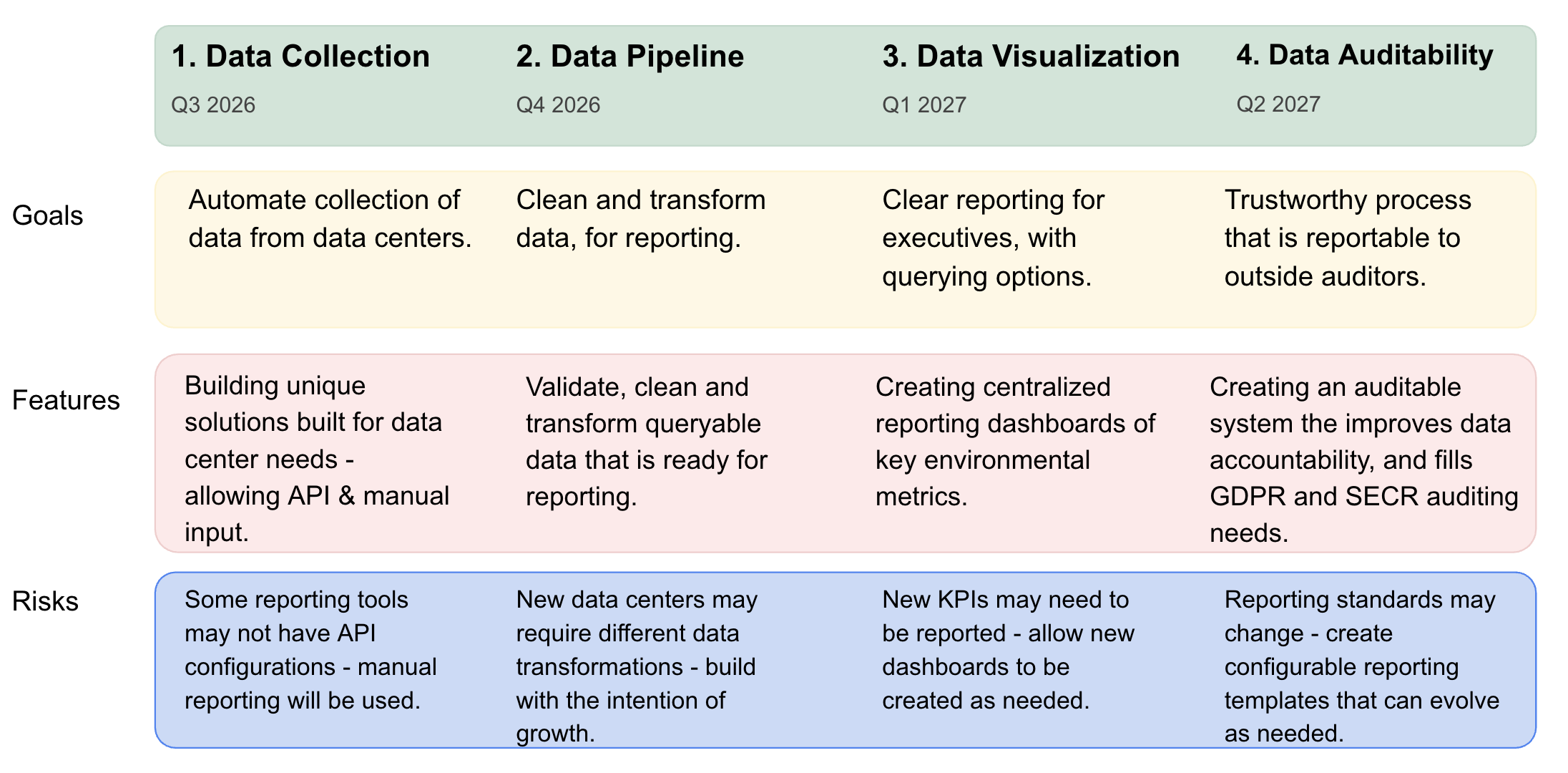

DCSMS (Data Center Sustainability Management System), a project I worked on in INFO 380, is built around a mock client, Meridian Retail Group. The goal was to design a system that helps a company track and manage the sustainability of its data centers. I wrote the product documentation, including user personas for sustainability analysts, data center facility managers, the Chief Sustainability Officer, and compliance and legal teams, along with strategic priorities and a three-sprint plan covering data ingestion, normalization, and Azure dashboarding. I also built a mock Excel dataset to represent the kind of data the system would handle.
Meridian Retail Group's (MRG) current system perpetuates problems such as ineffective data collection, delayed data reporting, and lack of sustainability and environmental practices. This affects customer and investor trust, causes sustainability analysts to overly depend on error prone human labor, exposes compliance and legal teams to larger threats in regulations, and hinders progress towards their net-zero carbon commitment goal by 2040. Implementing the Data Center Sustainability Management System (DCSMS) presents an opportunity to provide a centralized source of standardized data reporting across all twelve data centers. Additionally, DCSMS will aid MRG to target areas for environmental improvement. The DCSMS will position MRG to maintain customer and investor confidence, meet regulatory demands, and uphold its commitment to environmental responsibility.
All analysis is derived from mock interviews.
MRG has large amounts of data that is manually gathered, there are few automated processes, and no centralized source of data. This causes a delay in data reporting and worsens the audit process.
Data fragmentation - There is no standardized way of reporting environmental data from data centers. A Sustainability Analyst noted that most of their time was spent locating, cleaning, and standardizing data.
Increased data scrutiny - There are increased environmental requirements requiring easy auditing of environmental data. Currently, the CSuO notes that there's little understanding of data center footprint, negatively impacting audits and company image.
Time constraints - Current environmental reporting takes about 3 months and requires manual data collection, any data reported is already out of date.
We recommend a system that automates data collection for Sustainability Analysts, while standardizing both the units and types of data recorded. This system would streamline reporting processes and improve consistency across all data centers. Direct Data Pipeline: Establish an automated pipeline that collects, cleans, and consolidates environmental data from data centers in real time. Auditable Reporting: Develop reporting tools that automatically format and store environmental data in compliance-ready formats, ensuring that environmental information is accessible for government audits. Process Transparency & Data Security: Identify where data is estimated or automatically measured. Ensure role-based access control on all environmental data.